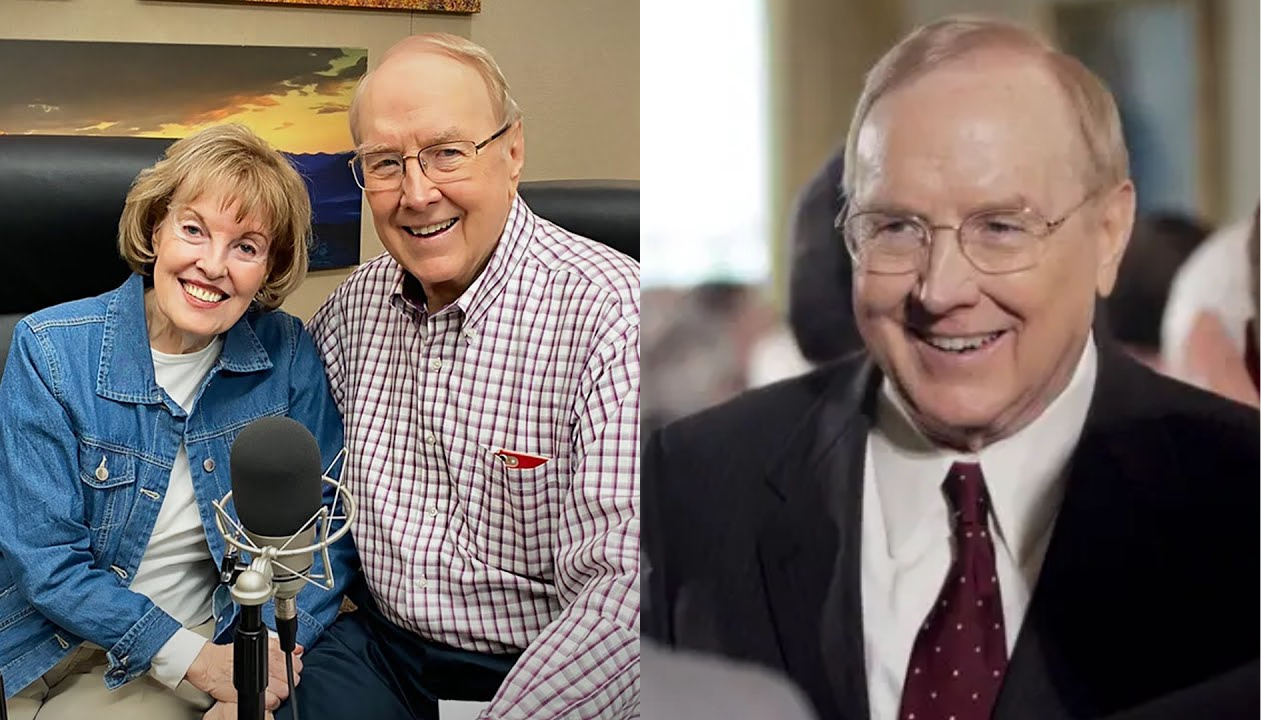
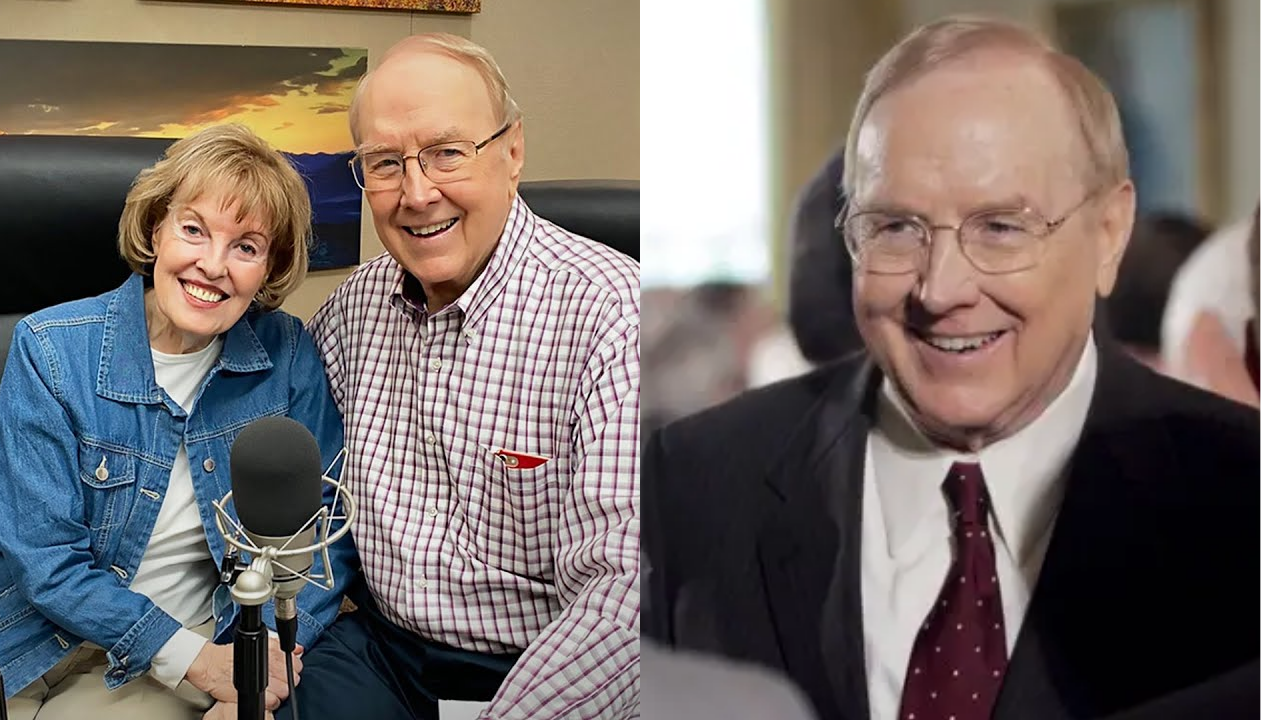
James Dobson, the evangelical leader who built an empire out of “family values,” has died today, and the news has sent shockwaves through both religious and political communities. For some, it is a moment of grief, a time to honor a man who influenced generations of conservative Christians with his writings, broadcasts, and political advocacy. For others, however, it is a moment of sharp contradiction, because Dobson’s legacy is not one of purity or principle, but of selective morality and blatant hypocrisy. The uncomfortable truth is that while he railed against secular culture, condemned Democrats, and held himself out as a guardian of moral order, Dobson simultaneously offered praise to Donald Trump—the man whose personal life was a walking rejection of every value Dobson claimed to cherish.
Dobson’s death forces us to revisit his complicated record, especially his treatment of two very different presidents: Barack Obama and Donald Trump. When Obama was in office, Dobson never missed a chance to criticize him, dismiss his speeches, and paint him as a danger to families and faith. This despite the fact that Obama has long been known as a devoted husband to Michelle Obama and a loving father to his daughters, Malia and Sasha. Obama lived without scandal in his personal life, never plagued by affairs, hush-money payments, or lawsuits over sexual misconduct. He modeled the very type of stable family life Dobson’s ministry claimed to uphold. Yet Dobson refused to acknowledge that, instead twisting Obama’s policies into signs of moral decay and portraying him as an enemy of Christian values.

But when it came to Trump, Dobson’s moral compass suddenly spun out of control. Trump, a man who openly bragged about affairs, paid off porn stars like Stormy Daniels to cover up his sexual escapades, and left a trail of broken marriages, somehow became Dobson’s champion of Christian values. Dobson once called Trump a “baby Christian,” as if that label excused a lifetime of immorality, dishonesty, and vulgarity. He encouraged evangelicals to vote for Trump, arguing that policy mattered more than personal character, a direct contradiction of everything he had preached for decades. It was the clearest example of how power, not principle, guided Dobson’s actions.
This selective morality is what makes Dobson’s death so complicated. For millions of Americans, he was a voice of reassurance, telling them how to raise children, how to manage their marriages, and how to remain faithful in a changing world. His “Focus on the Family” ministry was a cultural juggernaut, producing books, radio programs, and political campaigns that defined evangelical politics for a generation. Yet for millions of others, Dobson was nothing more than a culture warrior who used religion as a weapon, dividing the nation while claiming to protect it. His attacks on LGBTQ people, his opposition to women’s reproductive rights, and his constant fearmongering about secular society revealed a man more interested in control than compassion.
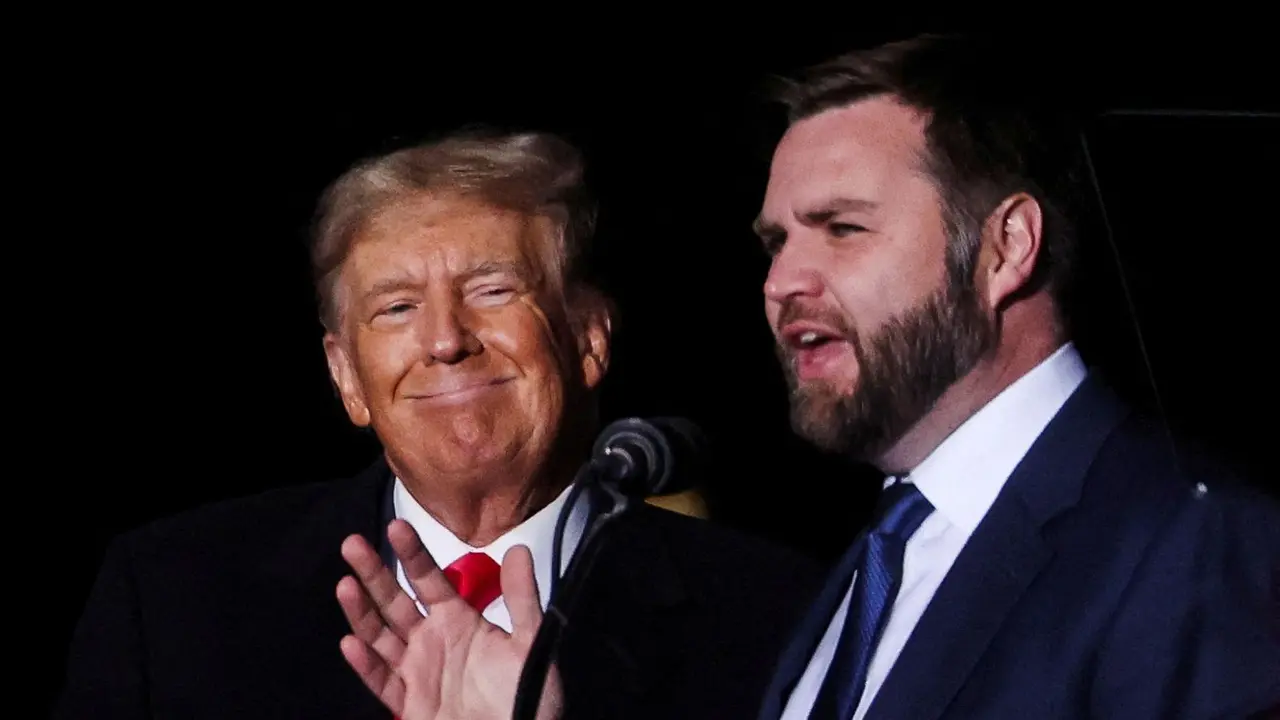
Dobson’s legacy also forces us to confront the deep hypocrisy in American evangelicalism. How could a movement that once declared “character counts” during the Clinton years suddenly abandon that principle when Trump appeared on the scene? The answer is simple: power. Dobson and leaders like him wanted access to political power more than they wanted to live by the standards they preached. Trump gave them that access, promising conservative judges, anti-abortion policies, and a platform to reshape the nation. In return, Dobson and others gave Trump a moral cover he never earned, branding him as a chosen leader despite the glaring contradictions of his life.
So today, as the headlines announce James Dobson’s death, we are left in an uneasy place. Do we remember him as the man who inspired millions to pursue stronger families, or as the man who betrayed his own message by aligning with Trump? Do we praise his influence, or do we expose his hypocrisy? The truth is that both realities exist, and neither cancels out the other. His death should not erase the damage his selective morality caused, nor should it silence the millions who felt attacked and demeaned by his rhetoric.
Perhaps the greatest irony of Dobson’s life is that his harshest words were reserved for someone like Barack Obama, a leader who lived the very family values Dobson claimed to champion. And his warmest praise was reserved for Donald Trump, the embodiment of infidelity, greed, and exploitation. That contradiction speaks volumes about the true priorities of Dobson’s movement. It was never really about family—it was about power, influence, and control.
In the end, James Dobson leaves behind a legacy that is impossible to celebrate without criticism. His passing may sadden those who admired him, but it should also remind us of the dangers of elevating leaders who preach one thing and practice another. To mourn him without acknowledging his hypocrisy would be dishonest. To condemn him without acknowledging his impact would be incomplete. James Dobson’s life was a story of influence, contradiction, and the moral compromises that define American politics. Whether you feel happy or sad about his death, one thing is certain: his legacy will continue to haunt the intersection of religion and politics for years to come.